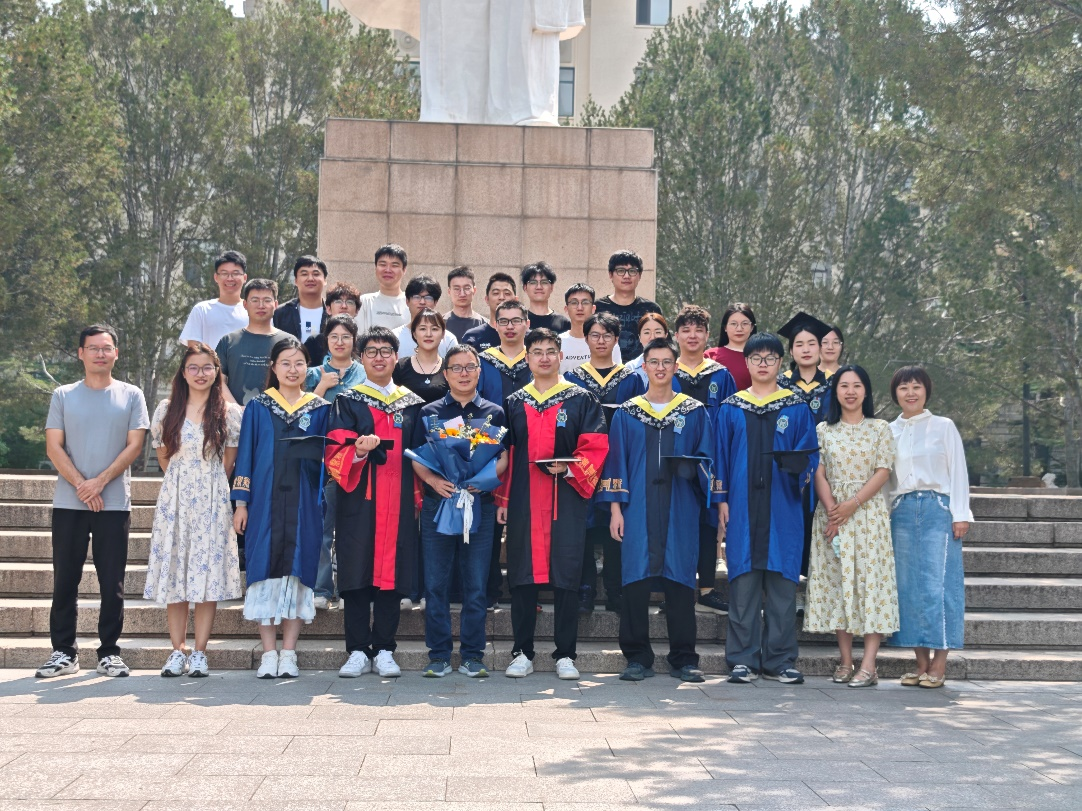
Owing to the outstanding thermal conductivity of AlN ceramics——power devices can maintain stable operating temperatures even under high-load conditions, thereby realizing their maximum performance without being constrained by excessive heat buildup
Aluminum nitride (AlN) possesses a unique combination of high thermal conductivity, low thermal expansion, and excellent electrical insulation, making it an indispensable material in fields such as semiconductors, new energy, microelectronics, and national defense. However, the synthesis of high-quality AlN powders remains technically challenging due to the stringent preparation conditions, difficulties in controlling impurities such as carbon and oxyg en, and the complexity of achieving dense sintering and tailored microstructures. For decades, the core technologies for producing high-performance AlN powders and high-thermal-conductivity products have been monopolized by a few countries, posing a major bottleneck to the advancement of high-tech industries in China. Since 2003, Prof. QIN Mingli and his research team at the University of Science and Technology Beijing (USTB) have been dedicated to the study of AlN powder materials and ceramic components. Through systematic investigations into material synthesis, property tuning, and key technologies for industrialization, the team has achieved a series of breakthrough advancements in the field.
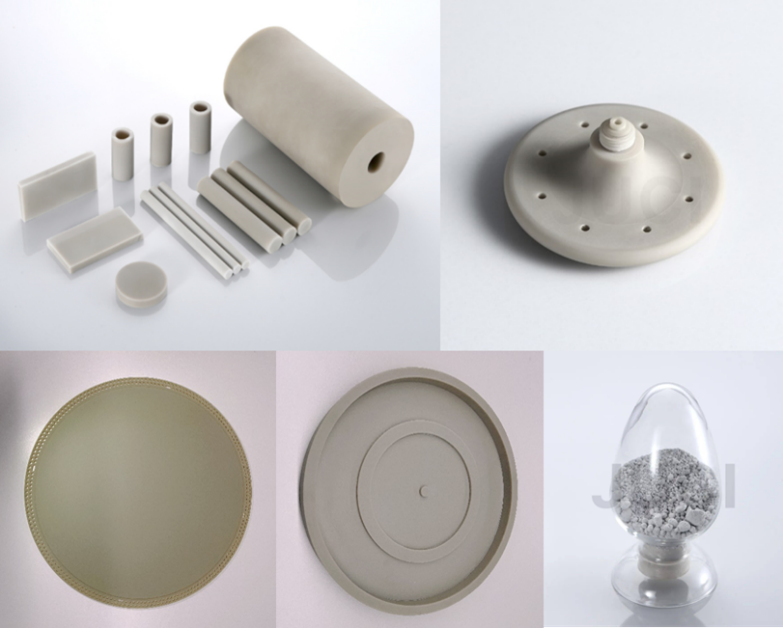
AlN powder and ceramic products
POWDER INNOVATION
“One of the major challenges in fabricating AlN ceramics is the preparation of the starting powder,” emphasized QIN. “Raw materials are fundamental—without quality powders, everything else is meaningless. The key lies in controlling particle size, morphology, as well as the carbon and oxygen content.” Traditionally, AlN powders are synthesized via carbothermal reduction of alumina and carbon black at high temperatures and long reaction durations. This often leads to excessive grain growth and agglomeration of the particles, making it difficult to control particle size and dispersion, while also driving up production costs. Moreover, the performance of AlN ceramics is highly sensitive to impurities such as oxygen, carbon, and residual metals in the powders, requiring stringent control over their concentrations.1 To address these critical issues, QIN and his team developed a novel short-process synthesis route based on “solution synthesis combined with low-temperature nitridation”. Soluble aluminum salts and water-soluble organic carbon sources are used as precursors to produce an amorphous, highly reactive “Al₂O₃ + C” intermediate via combustion synthesis.2,3 This approach significantly lowers the nitridation temperature and shortens the reaction time. The resulting AlN powders exhibit high specific surface area, excellent dispersion, fine particle size, and high purity—effectively overcoming the limitations of conventional methods.
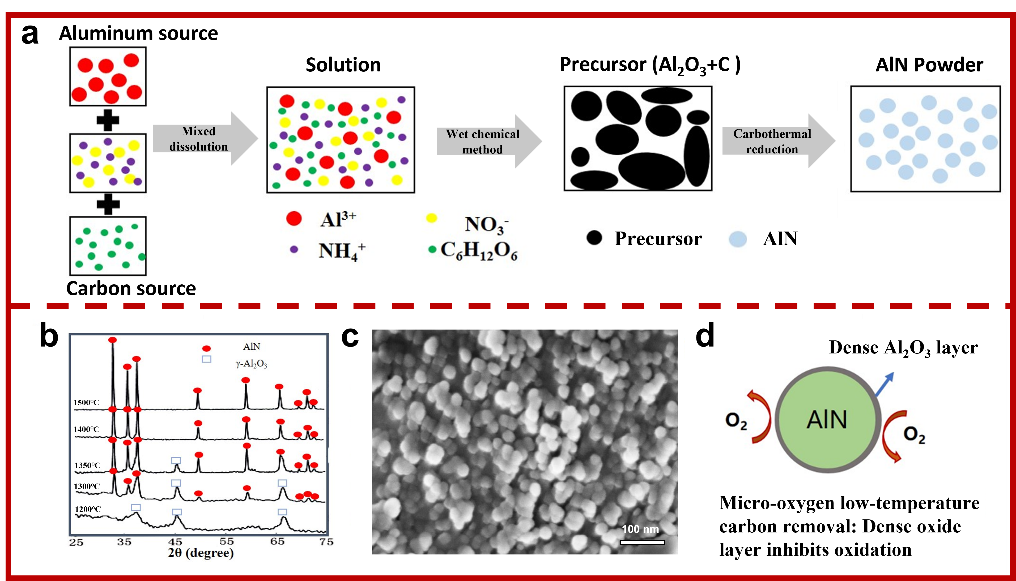
A new preparation technology for high-grade AlN powder. (a) schematic; (b) phase transformation during AlN preparation; (c) SEM image of AlN powder; (d) low-temperature decarbonization process of AlN powder.
TECHNOLOGY TRANSLATION AND INDUSTRIALIZATION
In 2016, QIN and his team took the lead in translating their research into practical applications by co-founding Xiamen Juci Technology Co., Ltd., with the aim of industrializing AlN powder production. The team focused on overcoming technical bottlenecks and developed a continuous decarbonization-nitridation furnace and an integrated low-pressure flow-atmosphere system. This equipment enables multi-stage calcination with precise control of oxygen partial pressure, ensuring more uniform and efficient reactions. It significantly shortens production time, prevents powder caking, and greatly improves yield. To further enhance manufacturing efficiency and quality, the team introduced intelligent manufacturing systems, including a machine vision-based online quality inspection platform and robotic dynamic sorting and assembly technologies. These advancements enabled fully automated production, ensuring consistent product quality while substantially reducing energy consumption. The resulting AlN powders match or exceed the specifications of internationally renowned manufacturers. The team has now established China’s largest production line for high-quality AlN powder, with an annual capacity of 600 t—effectively ending the country’ s long-standing reliance on imports for this critical material.
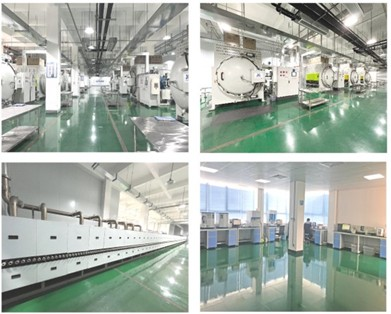
The production line for AlN powder and ceramic products
MISSION-DRIVEN INNOVATION
The high-quality AlN powders developed by QIN’s team have significantly enhanced the performance of AlN-based products under a wide range of operating conditions. These materials have been successfully applied in critical areas such as structural components for large-scale navigation and attitude control systems, parts for semiconductor manufacturing equipment, and thermal interface materials for spacecraft. The team has achieved remarkable innovation outcomes, with dozens of invention patents granted and successfully transferred. Their contributions have been recognized with numerous honors, including the National Technological Invention Award (Second Class) and multiple First Prizes for scientific and technological achievements at the provincial and ministerial levels. Looking ahead, the team is shifting its research focus toward the development of high-strength, high-thermal-conductivity AlN ceramics.4,5,6 By exploring novel sintering control strategies, they aim to create next-generation ceramic materials with even more advanced performance. “The needs of the country and the direction of industrial development define our research path,”QIN remarked. “To do meaningful science, one must stay passionate, work steadily, and persevere with dedication.”
REFERENCES
1. Qin, M. et al. J. Eur. Ceram. Soc. 29 (4), 795-799 (2009).https://doi.org/10.1016/j.jeurceramsoc.2008.07.019
2. He, Q. et al. Ceram. Int. 45 (12), 14568-14575 (2019).https://doi.org/10.1016/j.ceramint.2019.04.174
3. Lu, H. et al. Ceram. Int. 45 (18), 23890-23894 (2019).https://doi.org/10.1016/j.ceramint.2019.08.183
4. Qin, M. et al. J. Eur. Ceram. Soc. 39 (4), 952-956 (2019).https://doi.org/10.1016/j.jeurceramsoc.2018.11.037
5. Zhang, Z. et al. J. Eur. Ceram. Soc. 43 (2), 313-320 (2023).https://doi.org/10.1016/j.jeurceramsoc.2022.10.023
6. Zhang, Z. et al. Ceram. Int. 50 (22), 44957 - 44964 (2024).https://doi.org/10.1016/j.ceramint.2024.08.333