The latest brake materials are critical to a safe rail network.
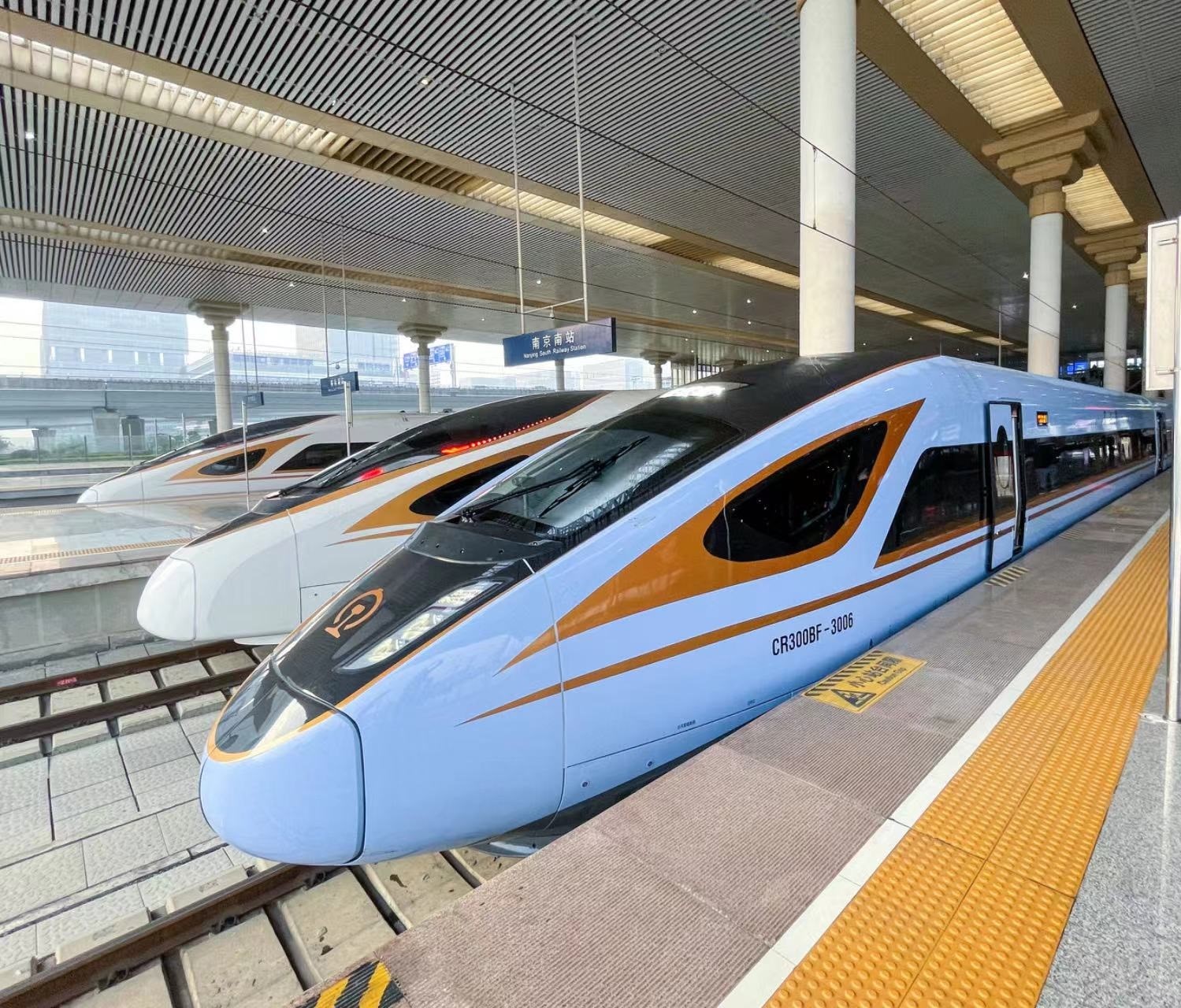
High-speed bullet trains in China use technologies developed by researchers at the University of Science and Technology Beijing to safely brake from speeds of up to 350 km/h.
China’s high-speed bullet trains routinely reach operational speeds of 350 kilometers per hour. Only trains in a few countries currently operate at such speeds. While these speeds slash commuting times for travelers, safe and rapid braking is critical.
Applying brakes at high speeds places huge pressure on brake pads and discs because it generates heat. Brake materials must be designed to withstand such demanding and repetitive conditions.
Technology advanced by a team led by material scientist Qu Xuanhui, a professor at the Institute for Advanced Materials and Technology of the University of Science and Technology Beijing (USTB), has been crucial for brake development. Over 20 years, Qu’s team has made innovations in ‘powder metallurgy’ that have improved the performance of brake pads under extreme conditions – such as those experienced by bullet trains.
Powder metallurgy
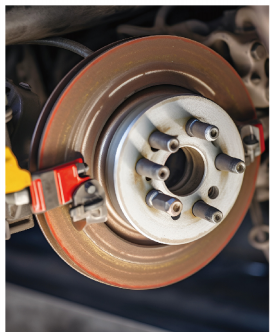
In Qu’s research, copper is used as a base material for brake pads. Qu’s team are able to improve durability and stability of brake pads at high temperatures by adding molybdenum disulfide (MoS2) 1 to regulate the microstructure, and by adjusting the particle types of iron2 and graphite3 and adding aluminum oxide fiber4.
“To improve performance, it’s essential to reveal new principles, design novel powder materials and develop innovative processes,” Qu says.
Powder metallurgy involves compacting a blend of high-quality powders in a mold and then treating it with heat and pressure to turn the loose material into a solid object.
Qu’s team uses powder metallurgy to tailor and produce alloys and composites with complex microstructures and shapes. Products are fabricated close to their target shapes, so that there is little or no need for further machining or processing.
“Our powder metallurgy techniques aim to provide flexible and sustainable, high-performance metal products,” Qu explains.
Optimizing materials
Working with the company Beijing Tianyishangjia New Materials, the Qu team’s first breakthrough was to reveal the origin of the fading phenomenon of friction coefficient, which happens when braking repeatedly under high loads or speeds reduces brake effectiveness. The process is two-fold: firstly, the copper-rich friction film with low strength destabilizes and rapidly migrates on the friction surface; secondly, when the temperature exceeds 600 ℃, graphite is oxidised1, 6.
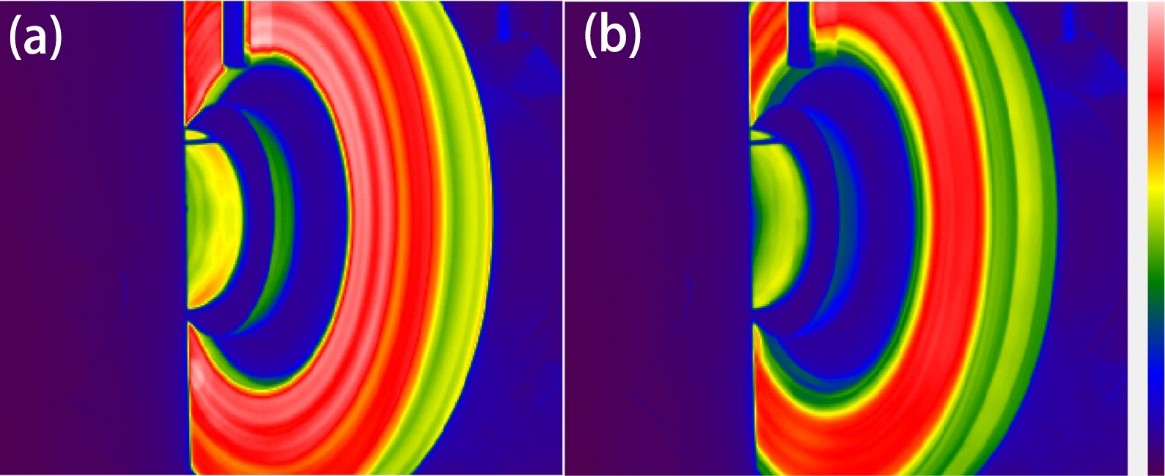
Copper-based brake pads during braking. Infra-red images show heat generated by conventional pads (a) and pads optimized to improve the uniformity of the contact surface (b), which reduces noise and wear.
To solve this problem, Qu and co-workers proposed a ‘collaborative regulation theory’ to provide a deeper understanding of how different components of brakes work together7. The pure copper matrix helps retain high plasticity and thermal conductivity, which helps keep the brake pads cool. Hard particles, such as iron, ferrochromium and chromium-iron powders, provide strength and toughness at the micro-to-nanoscale. Solid lubricant composed of graphite-MoS2-MoO3 reduces surface friction in temperatures as high as 600℃.
Results from tests using a full-scale dynamometer, a device used to evaluate braking performance, and use in China’s high-speed bullet trains, confirm the picture.
Strong support
Qu stresses that the technical support from USTB researchers played a pivotal role in Beijing Tianyishangjia New Materials’s position as the leading supplier of powder-metallurgy brake pads for high-speed trains in China.
More recently, Qu and his co-workers have been using data-driven models to simulate and identify brake materials with reduced wear and more stable performance6. “By applying different machine learning algorithms, the design of brake-pad materials made of copper alloys can be optimized,” says Qu.
Qu has worked at USTB for two decades, and is impressed with its collaborative and enterprising research environment. “Strong support is given to build teams and cultivate talent, as well as for experimental equipment and funding applications,” he explains. “USTB has also played a leading role on the world stage for powder metallurgy.”
As train speeds continue to increase on China’s railways, the discoveries made by Qu’s team will be essential to ensure safe braking.