Utilizing carbon dioxide in steelmaking helps offset carbon emissions while producing better quality steel.
Steel is a top greenhouse gase mitter, its manufacture producing almost twice its own weight in carbon dioxide emissions, according to the World Steel Association.Decarbonizing the steel industry is now an urgent priority for nations including China, which intends to become carbon-neutral by 2060,while continuing to build necessary steel-intensive infrastructure.
But environmental impact was not on ZHU Rong's mind when he embarked on his research pursuit to utilize carbon dioxide in steelmaking at the University of Science and Technology Beijing(USTB).It was 2002, and ZHU was agonizing over a question that a student raised in his ferrous metallurgy class.
"He asked how we could reduce the amount of black dust generated from steel mills,"ZHU recalls."His parents were farmers, and they grew vegetables near a steel mill. The dust made the produce unappetizing and difficult to sell.”
Having spent almost a decade observing and working with steel factories,ZHU understood how dust is generated.In a furnace,molten iron is purified by allowing its impurities to react with oxygen.When oxygen gas makes contact with the molten iron,an extremely hot fire spot is generated. When the temperature of the spot exceeds 2,700℃, the steel evaporates and reacts with the oxygen,generating fine iron oxide dust particles.
The challenge of reducing dust in this process,however,stumped ZHU."I felt terrible for not having a solution to this issue,"he said. ZHU spent the next year and a half turning the problem over in his mind,eventually wondering whether lowering the temperature of the fire spot might help.
ZHU and his team started mixing different compounds in the oxygen gas in a labora tory-scale furnace at USTB,which also hosts China's State Key Labora-tory of Advanced Metallurgy,to find out which type of chemical reactions might result in a cooling effect. One compound they tried, calcium carbonate,lowered the amount of dust generated considerably.“We thought,perhaps it was because calcium carbonate generated carbon dioxide,"ZHU recalled. The chemical reactions between carbon dioxide and steel impurities consume heat, thus helping to lower the mixtures temperature. So,the team tried mixing carbon dioxide gas in with oxygen.Not only did it help to reduce the amount of dust by 9.95%, the team would also learn years later, that refining steel with carbon dioxide comes with additional benefits.
Today, ZHU's technology of utilizing carbon dioxide in steelmaking has received significant attention."It helps offset carbone missions produced by the steel industry by 10%," says ZHU. The resulting steel is also of a higher quality, says ZHU, because carbon dioxide turns into carbon monoxide after it reacts with impurities in the melt,and stays as a gas that aids mixing.
ZHU and his team have since brought the technology out of the laboratory. Over the past two decades, the researchers established the theoretical principles and optimized the reaction conditionsfor using carbon dioxide to refine steel. Along the way, ZHU's team also established new industrial methods,such as a technique for precisely monitoring the high temperatures of the steel melt.
There are currently 10 steel companies in China refining steel with carbon dioxide using this method, says ZHU, including top steelmaker, Shougang, which invested in a state-of- the-art carbon capture facility to reuse itsown carbon emissions. ZHU and his team hope to welcome and introduce international steelmakers to this beneficial technology.
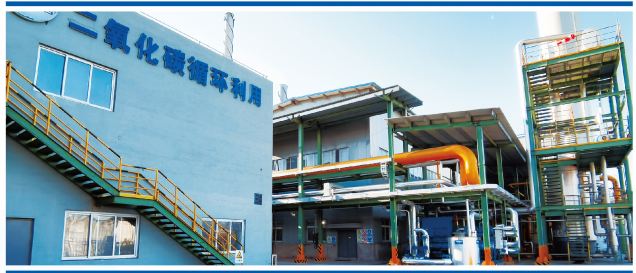
STATE KEY LABORATORY OF ADVANCED METALLURGY
The State Key Laboratory of Advanced Metallurgy(SKLAM) was founded in October 2011, approved by the Ministry of Science and Technology of China.With two Academicians of the Chinese Academy of Science, a faculty of around 60 professors and senior engineers, and more than 400 post-doctoral, doctoral and graduate students,it focuses on the research of high-temperature reactive mechanisms and kinetics, low carbon metallurgy, resource utilization, and clean steel production. SKLAM aims to realize high-efficiency energy conversion, resource utilization, and high-end steel production for the iron and steel industry.