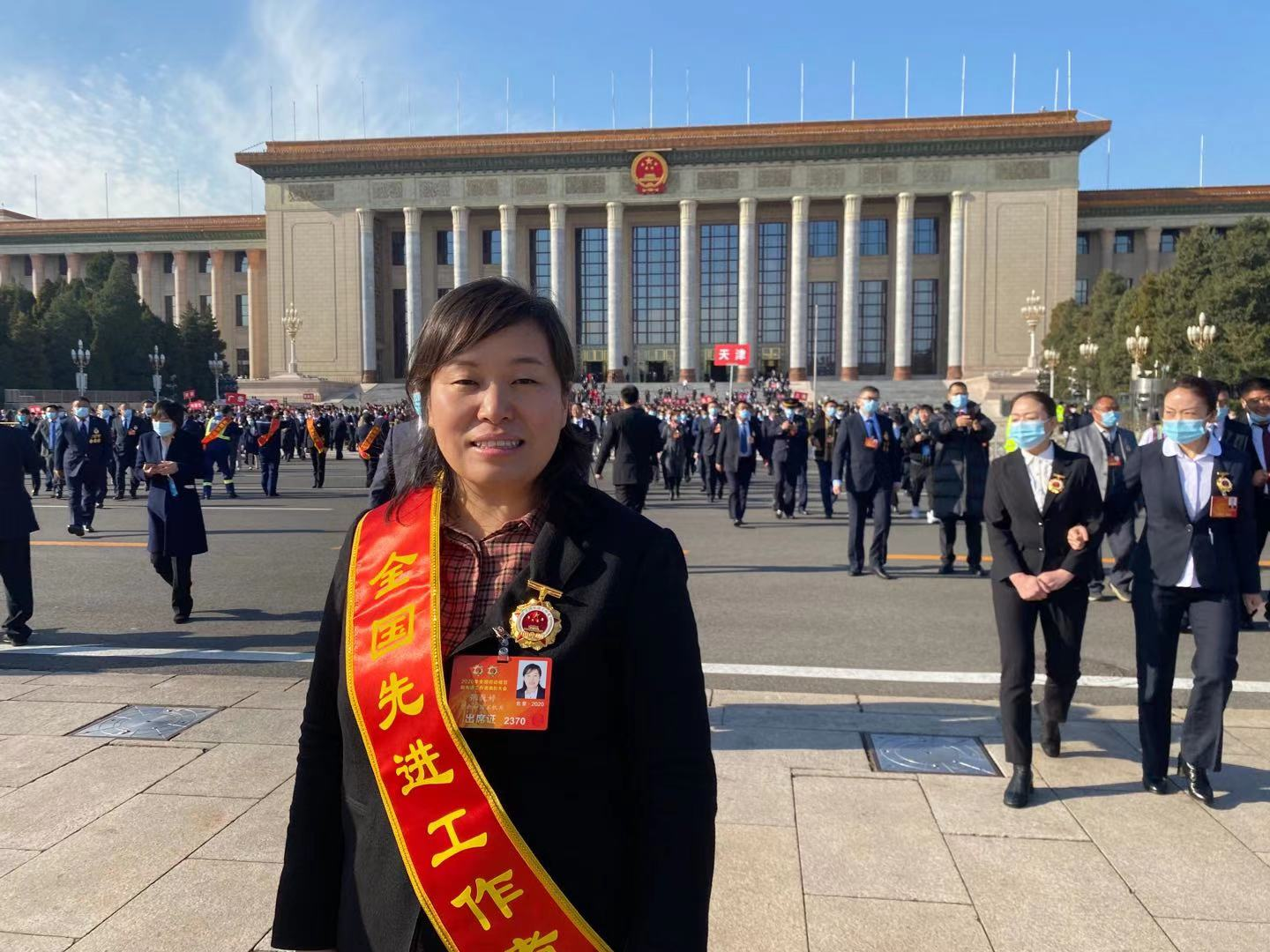
ZHANG Weiting, born in June 1979, is of Han ethnicity and a member of the Communist Party of China. She holds a doctoral degree in law from the University of Science and Technology Beijing (USTB, Class of 2012).
She serves as Deputy Division-Level Official at the Inspection Office of the State Bureau for Letters and Calls, and is currently on temporary assignment as First Secretary of the Party Branch of Zhangchangfeng Village in Suji Town, Haixing County, Cangzhou, Hebei Province.
ZHANG has received numerous honors, including Outstanding Inspector of the National Petition System, the Beijing March 8th Red Banner Medal, and multiple provincial commendations. She was named a National March 8th Red-Banner Holder in 2019 and was awarded the title of National Advanced Worker in 2020.
A Dedicated Leader at the Grassroots
Since taking up her post as First Secretary in May 2018, ZHANG Weiting has devoted herself wholeheartedly to village development. Known among villagers for her tireless work ethic, she often worked late into the night, pushing through physical exhaustion and health challenges to ensure that every task was completed.
Under her leadership, more than 40 impoverished households in the village doubled their income within the first year. Initial doubts about her background—as a central government official, a PhD holder, and a woman—quickly gave way to widespread respect as her results became evident.
Driven by a strong sense of responsibility, she remained committed to one goal: improving the livelihoods of the villagers. Within a short period, Zhangchangfeng Village transformed from a poverty-stricken and underperforming community into a provincial model for rural collective economic development and grassroots Party building. All registered impoverished households were successfully lifted out of poverty.
Turning Local Resources into Opportunities
Faced with limited economic prospects, ZHANG focused on identifying viable pathways to prosperity. During her field visits, she discovered that the village’s dryland wheat—grown in saline-alkali soil without fertilizers or pesticides—had exceptional quality despite its low yield.
Recognizing its potential as a natural, high-value agricultural product, she initiated scientific testing and market positioning. The results confirmed that the wheat had higher levels of nutrients such as calcium and potassium, as well as superior gluten content.
Building on this discovery, ZHANG developed a strategy centered on branding and product diversification. She helped establish the “Zhangchangfeng” trademark, organized a cooperative, and set up a traditional stone-mill processing workshop. A range of products—including flour, handmade steamed buns, noodles, coarse grains, chili paste, and apples—were introduced to the market.
She also secured the county’s first food processing permit for traditional flour-based products and launched an online store to expand sales channels. With the products featured on national television programs and e-commerce platforms, annual sales exceeded RMB 1 million. What began as a simple local specialty truly “blossomed” into a sustainable source of income.
Building a Sustainable Future
As the village’s development gained momentum, ZHANG turned her focus to long-term sustainability. She prioritized cultivating local leaders, strengthening the village governance structure, and establishing effective working mechanisms.
Although her assignment has a defined term, ZHANG remains deeply committed to the village’s future. She emphasizes the importance of leaving behind a capable leadership team, sound institutional frameworks, and a culture of initiative—ensuring that progress continues even after her departure.
Her work has earned not only recognition but also heartfelt appreciation from the villagers. As many have expressed, her arrival brought not only economic improvement, but also new ideas, stronger organization, and renewed hope.
Through dedication, innovation, and a deep sense of responsibility, ZHANG Weiting has transformed challenges into opportunities. Her work exemplifies the impact that committed public service can have at the grassroots level, turning local potential into lasting development and enabling communities to thrive.