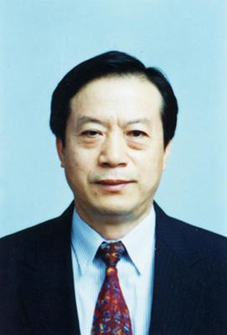
LIU Jie, born on November 22, 1943, in Lu’an, Anhui Province, is an academician of the Chinese Academy of Engineering and a leading expert in metallurgical automation and information engineering. He is an alumnus of Beijing University of Iron and Steel (now the University of Science and Technology Beijing, USTB), Class of 1964 in Metallurgical Machinery.
He has held a number of prominent leadership positions, including First Vice General Manager and Chief Engineer of Wuhan Iron and Steel Group, and Party Secretary and General Manager of Anshan Iron and Steel Group (Ansteel). He has also served as Vice Chairman of the China Association for Science and Technology and Vice President of the Chinese Society for Metals.
LIU has long been engaged in research and development of computer control systems and mathematical models for the metallurgical industry. His contributions have been recognized with multiple National Science and Technology Progress Awards, including Special Prize, First Prize, and Second Prize. He was awarded the title of National Model Worker in 2000 and the National May 1 Labor Medal in 2004.
Stepping Forward in a Time of Crisis
At the end of 1994, Ansteel was facing severe challenges: financial difficulties, outdated equipment, declining productivity, and heavy social burdens. Despite nationwide economic reforms, the company remained constrained by outdated mechanisms and struggled to adapt to market demands.
At this critical juncture, LIU Jie took on the responsibility of leading Ansteel. Although he had opportunities to pursue positions in government or research institutions, he chose to work at the enterprise level, motivated by a strong sense of responsibility. As he recalled,“I felt a greater sense of duty at Ansteel, where hundreds of thousands of people depended on the company’s future.”
Upon assuming leadership, LIU introduced a series of decisive reforms. He restructured the company’s sales system and organizational framework in accordance with modern enterprise principles—clarifying property rights, defining responsibilities, separating government functions from enterprise management, and promoting scientific governance.
Within just six months, Ansteel began to recover. By the mid-1990s, the company had returned to profitability, and since 2000, it has maintained stable operations without arrears in payments or wages. Under LIU’s leadership, Ansteel entered a phase of sustained and healthy development.
Achieving More with Efficient Investment
As both an academician and a business leader, LIU Jie developed a distinctive approach to enterprise management, emphasizing efficiency and accountability.
He implemented structural reforms by streamlining core operations and separating auxiliary units, establishing a system of independently accountable subsidiaries. These measures improved cost control and operational efficiency, allowing many previously loss-making units to return to profitability.
In technological upgrading, LIU advocated for maximizing the use of existing assets and focusing investment on key areas. Ansteel completed major system transformations—including converter steelmaking and continuous rolling—within a remarkably short timeframe and at significantly reduced cost.
During the Ninth Five-Year Plan period, the company saved tens of billions of RMB in investment compared to national planning benchmarks, with a rapid return on investment. LIU emphasized that economic efficiency should remain the central goal of all production and management activities.
Integrating with the Global Economy
LIU Jie consistently promoted a global perspective in enterprise development. He believed that large industrial enterprises must actively integrate into international markets, leveraging both domestic and global resources to maximize competitiveness.
He also emphasized the importance of combining information technology with traditional industries. Under his leadership, Ansteel advanced its informatization efforts, using digital systems to improve production control, market responsiveness, and management efficiency.
At the same time, LIU placed strong emphasis on environmental protection, recognizing it as an essential component of sustainable industrial development. Major technological upgrades at Ansteel were required to meet international environmental standards, leading to significant improvements in air and water quality.
A Legacy of Reform and Innovation
After more than a decade of leadership at Ansteel, LIU Jie led the company through a comprehensive transformation. By the time of his retirement in 2007, Ansteel’s economic performance had increased more than thirtyfold, non-performing assets had been substantially reduced, and total net assets had grown significantly.
The company’s equipment, productivity, and workforce conditions were fundamentally improved, and it emerged as a leading enterprise in China’s steel industry.
Reflecting on his experience, LIU emphasized that challenges can be overcome through sound policies, strong leadership, and collective effort. His work stands as a model of how technological innovation and institutional reform can drive industrial revitalization.
Through his dedication to both science and management, LIU Jie exemplifies the role of a modern industrial leader—bridging engineering expertise with strategic vision, and contributing to the transformation of China’s steel industry on the global stage.