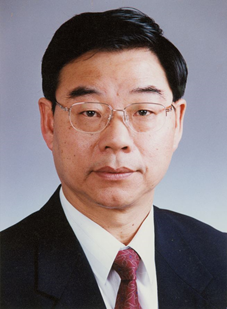
SUN Chuanyao, born in December 1944 in Raohe County, Heilongjiang Province (ancestral home in Dongping, Shandong), is a mineral processing expert and an academician of the Chinese Academy of Engineering. He is a member of the Communist Party of China and currently serves as Director of the State Key Laboratory of Mineral Processing Science and Technology.
He previously served as President of the Beijing General Research Institute of Mining and Metallurgy and has held leading academic positions in major professional organizations, including the Mining Committee of the China Mining Association and the Mineral Processing Committee of the Chinese Nonferrous Metals Society. He has also been a professor and doctoral supervisor at several leading universities, including USTB.
SUN was elected as a foreign academician of the St. Petersburg Engineering Academy in 1991, awarded the title of National Model Worker in 2000, and elected as an academician of the Chinese Academy of Engineering in 2003.
Forged in the Harsh Environment of Koktokay
Koktokay, once renowned worldwide for its rich mineral resources, is located deep in the Altai Mountains at the border region of China, Russia, and Mongolia. Despite its geological wealth, the region is known for its extreme conditions, with winter temperatures often dropping below -40°C.
After graduating in 1968, SUN Chuanyao was among a group of young engineers assigned to the Koktokay Mining Bureau in Xinjiang, where he would spend nearly a decade. During this time, he took on a wide range of frontline roles—from manual labor and underground mining to grinding, magnetic separation, and flotation operations in the processing plant.
These demanding experiences not only tested his endurance but also equipped him with a deep, practical understanding of mineral processing. This strong foundation later distinguished him as both a hands-on engineer and a leading researcher.
Tackling Critical Technical Challenges
During his time in Koktokay, SUN transitioned to technical work and soon faced a major challenge: the processing of low-grade lithium ore. Due to limitations in existing processes, the resulting lithium concentrate consistently failed to meet quality standards.
At around the age of 30, SUN took the initiative to address the issue. Working independently in the laboratory and organizing industrial implementation, he redesigned the process by introducing reverse flotation prior to lithium flotation, effectively removing gangue minerals and optimizing reagent systems.
As a result, lithium concentrate grades improved significantly—from raw ore with 0.32% lithium oxide to concentrate levels reaching 4.42%, surpassing the standard requirement. This breakthrough not only resolved a long-standing production bottleneck but also provided a viable technical solution for the efficient utilization of low-grade lithium resources.
In 1975, SUN was tasked with leading a major industrial-scale flotation experiment critical to the construction of a new processing plant. Faced with equipment shortages in the remote region, he led a team to design and manufacture flotation machines locally. After more than 20 days of continuous work, the equipment was successfully installed and put into operation—ensuring the project’s timely progress.
From the Altai Mountains to Scientific Leadership
In 1978, SUN left Koktokay and was admitted, with top ranking, to the Beijing General Research Institute of Mining and Metallurgy for postgraduate study. Under the guidance of leading experts, he completed his master’s degree in 1981.
His research introduced a crystal chemistry perspective to mineral flotation, attracting significant attention in academic circles. At a national conference in 1982, his presentation on the relationship between crystal structure, surface properties, and floatability was widely praised and marked his emergence as a promising scholar.
Over the following decades, SUN combined his extensive practical experience with solid theoretical foundations to become a leading figure in mineral processing engineering. His work has contributed to advancements in the beneficiation of complex ores, including lithium, beryllium, tantalum, niobium, copper, nickel, tungsten, and molybdenum.
Advancing Research and Institutional Development
As both a scientist and institutional leader, SUN Chuanyao played a key role in promoting the integration of research, engineering, and industrial application. During his tenure as President of the Beijing General Research Institute of Mining and Metallurgy, he advocated a coordinated development model that links scientific research, engineering design, and industrialization.
He emphasized that research institutions should fulfill multiple responsibilities—scientific, economic, social, and technological—and contribute to national development through innovation and application.
Under such leadership, the institute has evolved into a major center for resource utilization and materials science, with growing international influence.
A Life Dedicated to Purpose
In recognition of his outstanding contributions to mineral processing science and engineering, SUN Chuanyao was elected as an academician of the Chinese Academy of Engineering in 2003.
Reflecting on his life’s journey, he once remarked:“There are many ways to live a life. What I pursue is simple—to make my life meaningful, to make my education worthwhile, and to truly apply what I have learned.”
Through decades of dedication, SUN Chuanyao has exemplified the integration of practice and theory, perseverance and innovation—emerging from the remote mines of Koktokay to become a leading figure in China’s mineral processing industry.